
2 CDs · Streaming
← Visit the shop
You may also like

About this recording
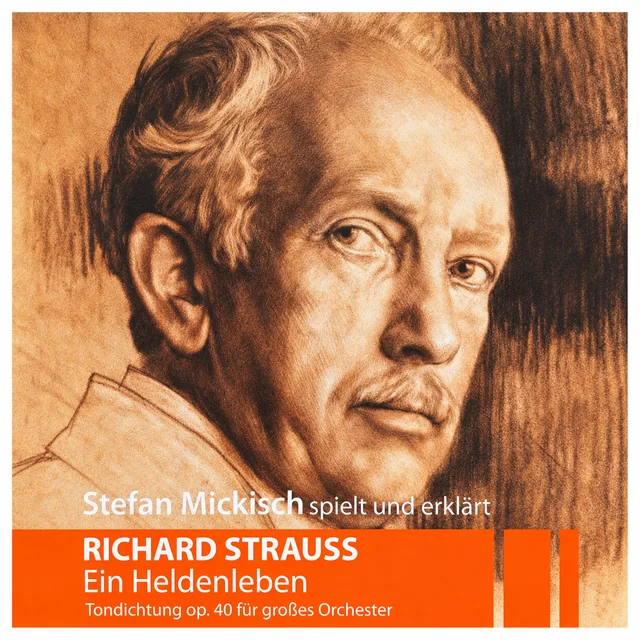
Of course Richard Strauss portrayed himself in this piece. Who else? It is clear that he claimed the appropriate key for himself: E-flat major = Eroica = Siegfried. He depicted the critics—his adversaries—in ca(c)cophonous, tonally unmoored chatter, identifying them as what they are: vampires. Those who have achieved nothing write for newspapers; it has always been so. Today (2020), the “profession” of the Beckmessers is mostly practised by emancipated women wearing colourful scarves. Before the score was published, Strauss’s father, Franz Strauss from Parkstein in the Upper Palatinate, wrote to his son that surely he could not write such unmusic to portray his adversaries, however dreadful they might be. In response, his son changed—not a single note.
Live recording at the Wiener Konzerthaus.
- Background
- The hero and the carping critics
- The companion
- Struggle against the obtuse world, disgust, the hero’s works of peace (Richard Strauss’s self-quotations)
- Retreat, peace, turning away from the world
Total playing time: 95′35″.
Synopsis of Richard Strauss’s nine tone poems: the premieres
02.03.1887 From Italy
(not a “tone poem” but a “symphonic fantasy”)
11.11.1889 Don Juan
21.06.1890 Death and Transfiguration
13.10.1890 Macbeth
05.11.1895 Till Eulenspiegel’s Merry Pranks
27.11.1896 Thus Spoke Zarathustra
08.03.1898 Don Quixote
03.03.1899 A Hero’s Life
31.03.1904 Symphonia domestica
28.11.1915 An Alpine Symphony
Of course Richard Strauss portrayed himself in this piece. Who else? It is clear that he claimed the appropriate key for himself: E-flat major = Eroica = Siegfried. He depicted the critics—his adversaries—in ca(c)cophonous, tonally unmoored chatter, identifying them as what they are: vampires. Those who have achieved nothing write for newspapers; it has always been so. Today (2020), the “profession” of the Beckmessers is mostly practised by emancipated women wearing colourful scarves. Before the score was published, Strauss’s father, Franz Strauss from Parkstein in the Upper Palatinate, wrote to his son that surely he could not write such unmusic to portray his adversaries, however dreadful they might be. In response, his son changed—not a single note.
Live recording at the Wiener Konzerthaus.
CD 1 – 53′13″
1 Background
2 The hero and the carping critics
3 The companion
CD 2 – 42′22″
1 Struggle against the obtuse world, disgust, the hero’s works of peace (Richard Strauss’s self-quotations)
2 Retreat, peace, turning away from the world
Total playing time: 95′35″.
Synopsis of Richard Strauss’s nine tone poems: the premieres
02.03.1887 From Italy
(not a “tone poem” but a “symphonic fantasy”)
11.11.1889 Don Juan
21.06.1890 Death and Transfiguration
13.10.1890 Macbeth
05.11.1895 Till Eulenspiegel’s Merry Pranks
27.11.1896 Thus Spoke Zarathustra
08.03.1898 Don Quixote
03.03.1899 A Hero’s Life
31.03.1904 Symphonia domestica
28.11.1915 An Alpine Symphony