2 CDs · Streaming
← Visit the shop
Richard Strauss
Salome
Audio
You may also like


About this recording
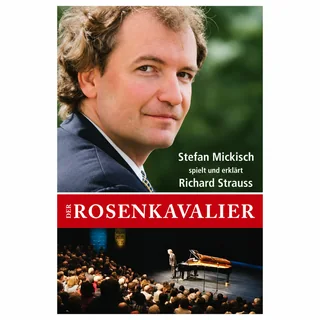
Stefan Mickisch plays and explains:
Richard Strauss – Salome. Live recording at the Wiener Konzerthaus on 5 May 2013.
Total playing time: 99′34″.
Salome – opera in one act, Op. 54
With his third opera, ‘Salome’ (after ‘Guntram’ and ‘Feuersnot’), Richard Strauss achieved worldwide recognition as an opera composer at a stroke in 1905. Since 1888, his orchestral tone poems (‘Don Juan’, ‘Till Eulenspiegel’s Merry Pranks’, ‘Thus Spoke Zarathustra’ and others) had already placed him alongside Gustav Mahler at the forefront of the musical avant-garde of his time, long before Arnold Schoenberg created his epoch-making work.
Besides musical, dramatic and formal power—the power to create form—the quality of every great opera composer lies in objectivity towards the concerns and viewpoints of the antagonistic characters appearing in his operas. We know that, long after completing ‘Salome’, Richard Strauss told Stefan Zweig that he had conceived and composed Jochanaan as ‘Jesuitical’ and sermonising, essentially a caricature of Christianity. Ultimately, one cannot agree with this statement in a letter, which the composer certainly also expressed in conversation, once one hears the themes of John the Baptist—Jochanaan—in ‘Salome’, above all the ‘mystic’ motif. They radiate great power. On first encountering ‘Salome’, as a ‘newcomer’, one may even find the clarity and rather more tonal grounding of Jochanaan’s character more impressive than Princess Salome’s constellations of motifs. This changes, however, as one becomes more familiar with the music. Salome’s serpentine, opalescent garlands grow ever more attractive, and the emotional power of her love themes in the final song becomes increasingly persuasive. In the end one really wonders: why did Jochanaan not look at her, why did he ignore her, even curse her? Examining this question reveals the rift that the hostility towards the body of a Paul and an Augustine brought into the world. Jochanaan’s remark, ‘Daughter of Babylon! Through woman misfortune came into the world. Do not speak to me’ (supported by the Bible), can hardly be seriously convincing.
Friedrich Nietzsche’s explanation of creation is rather more persuasive: ‘God was bored, so he created the earth. Still bored, he created man. Now there were two who were bored. Then God created woman, and boredom came to an end…’
Stefan Mickisch